
Morgan, Jennifer L. "Cultures and contexts in the Black Atlantic." Throughlines. www.throughlines.org/suite-content/cultures-and-contexts-in-the-black-atlantic. [Date accessed].
Cultures and contexts in the Black Atlantic
What do we mean by the “Black Atlantic”?
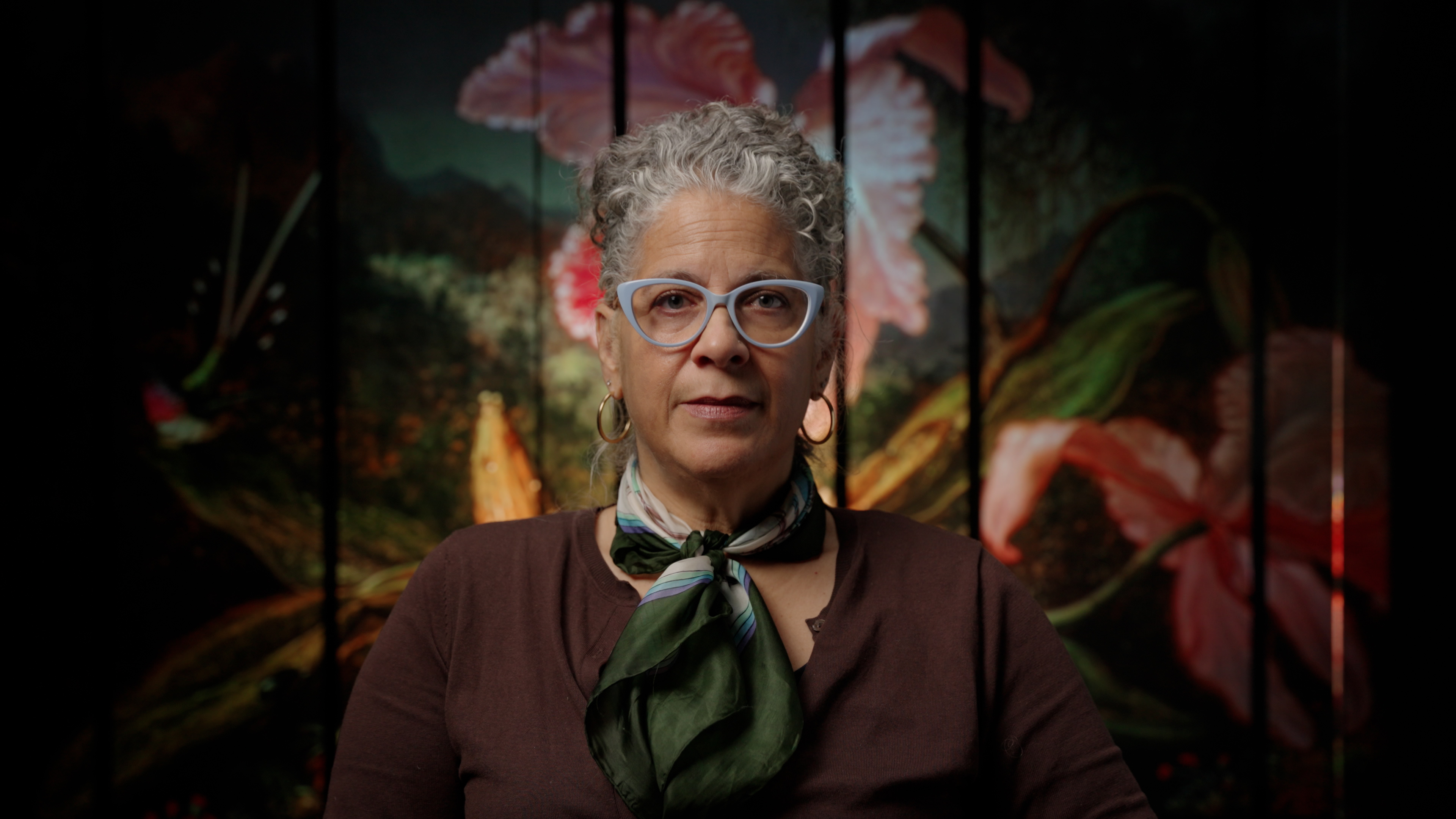
This course introduces students to the history of an aspect of the African Diaspora and to its cultural, economic, and oppositional consequences. The core concern of this class is the particular relationship between Africa, Europe, and the Americas and the various ideological, political, and cultural consequences of that relationship as it circles back, forth, and around the Atlantic Ocean.
The course is organized both historically and geographically from the 15th century forward and from Africa to Europe, the Americas, and back again. This course should provide students with a clear understanding of some of the core issues that both propel African people into the Atlantic and determine their experiences once in the Americas.
Students will read across a range of academic disciplines, including history, economics, anthropology, literature, and philosophy.
The course traces the origins and importance of the concept of the Black Atlantic in the context of European imperial expansion, paying special attention to the social relations that shaped community formation among people of African descent and laid the foundations for their political and economic institutions. Throughout, students will explore these developments through the lens of historical events that include the experience of capture and transport, the work of slave labor, the fights for Emancipation, 19th and 20th century colonialism and Freedom Movements, and finally the contemporary struggles over what this history has meant and how to remember it.
This course explores the Black Atlantic as a socio-cultural and economic space from the 15th-century arrival of Africans in the "New World," through the rise of slavery in the Americas, continuing on to slave emancipation and decolonization in the nineteenth and twentieth centuries and concluding with contemporary Black life in the Atlantic world. The intention here is to introduce students to important moments in the history of the Black Atlantic and to engage, through interdisciplinary writings, with questions of meaning-making.
Each week students will examine a distinct time and place, but there are thematic threads that link the lectures, readings, and discussions. The questions or themes throughout revolve broadly around culture, economies, and opposition.
This course aims to give students an introduction to the overlapping phenomena that comprise the history of the African Diaspora—modern economies, race, cultural practices, religious beliefs, and the mobilizing of power to both construct and oppose racial and economic hierarchies.
Week 1 - History and the start of the Black Atlantic
Key question: What are the origins of the Atlantic slave trade?
Reading
- Smallwood, Stephanie E. Saltwater Slavery: A Middle Passage from Africa to American Diaspora. Cambridge, MA: Harvard University Press, 2007.
Assignment
- Read Shana L. Redmond, “Diaspora” from Keywords for African American Studies. Highlight a definition or insight that you find provocative.
- Write a definition of your own.
- Come to class prepared to share your definition and to discuss the following questions:
How does this text help you define the Black Atlantic?
What do you anticipate that you will learn this semester?
What would you like to understand by the end of the semester?
Week 2 - Culture and economies
Key question: What does slavery “make” for capitalism?
Readings
- Carney, Judith A. Black Rice: The African Origins of Rice Cultivation in the Americas. Cambridge, MA: Harvard University Press, 2001.
- Helg, Aline. Slave No More: Self-Liberation before Abolitionism in the Americas. Chapel Hill: University of North Carolina Press, 2017.
- Roberts, Justin. "The Whip and the Hoe: Violence, Work, and Productivity on Anglo-American Plantations." Journal of Global Slavery 6 (2021): 108–30.
Assignment
- In your small group forums, share your responses to the video, and comment on those of your peers.
Week 3 - A pause for theories of reverberations and resistance
Key question: What are the afterlives of slavery?
Readings
- McKittrick, Katherine. "Mathematics Black Life." The Black Scholar 44, no. 2 (2014).
- Sharpe, Christina. In the Wake: On Blackness and Being. Durham, NC: Duke University Press, 2016.
Week 4 - Freedoms taken and the notion of freedom
Key question: What is the relationship between slavery and freedom?
Readings
- Byrd, Alexander X. Captives and Voyagers: Black Migrants across the Eighteenth-Century British Atlantic World. Baton Rouge: Louisiana State University Press, 2008.
- Eddins, Crystal Nicole. Rituals, Runaways, and the Haitian Revolution: Collective Action in the African Diaspora. Cambridge: Cambridge University Press, 2022.
Assignment
- Read The Haitian Constitution, 1805.
- Using the class discussion forum, think collectively about what this constitution tells you about the ways in which Haitian leaders were conceptualizing freedom at the start of the 19th century.
- What part of their definition was rooted in the experience of enslavement? What part has other roots?
Week 5 - The “ends” of slavery
Key question: Who ends slavery and why?
Reading
- Schmidt-Nowara, Christopher. Slavery, Freedom, and Abolition in Latin America and the Atlantic World. Albuquerque: University of New Mexico Press, 2011.
Assignment
- Read Frederick Douglass, “What to the Slave is The Fourth of July?”
- In the class discussion forum, post: what does freedom mean to Douglass?
Week 6 - A pivot to Africa, modern colonialism, and race at the start of the 20th century
Key question: Does the end of the trans-Atlantic slave trade signal new relationships between Europe, the Americas, and Africa?
Reading
- Williams, George Washington. "An Open Letter to His Serene Majesty Leopold II, King of the Belgians and Sovereign of the Independent State of Congo." 1890.
Assignment
- Read the letter in its entirety.
- Discuss one of his twelve itemized complaints against Leopold’s government.
- How does Williams situate the particular complaint as evidence against a much wider structure of exploitation?
Week 7 - Preserving cultures
Key question: Can cultural displays be objective or neutral? Is that even the right question?
Readings
- Fota, Ana. "What's Wrong with This Diorama? You Can Read All About It." New York Times, March 20, 2019.
- Mears, Cynthia, and Wayne Modest. "Museums, African Collections, and Social Justice."
- "His Name Was Belizaire: Rare Portrait of Enslaved Child Arrives at the Met." New York Times, August 14, 2023.
Week 8 - Pan-Africanism and colonialism: Resisting European and American incursions or anti-imperialism in the Black Atlantic
Key question: What does “Africa” mean to the early 20th century diaspora?
Readings
- “Address to the Nations of the World” by the Pan-African Conference in London, 1899. A letter drafted by W. E. B. Du Bois for the first pan-African conference organized by the Trinidadian barrister Henry Sylvester Williams held in London from 23 to 25 July 1900.
- Robert Vinson, “Providential Design: American Negroes and Garveyism in South Africa.” In From Toussaint to Tupac: The Black International since the Age of Revolution, edited by Michael O. West, William G. Martin, And Fanon Che Wilkins, 130–54. University of North Carolina Press, 2009.
Week 9 - Black modernities/Africa as catalyst
Key question: How do freedom movements criss-cross the Atlantic in the 20th century?
Readings
- Putnam, Lara. "Nothing Matters but Color: Transnational Circuits, the Interwar Caribbean, and the Black International." In From Toussaint to Tupac: The Black International since the Age of Revolution, edited by Michael O. West, William G. Martin, and Fanon Che Wilkins, 107–29. Chapel Hill: University of North Carolina Press, 2009.
- "Reckon with the Past to Decolonize the Future." To the Best of Our Knowledge. Wisconsin Public Radio.
- "Reflections on 1960, the Year of Africa." New York Times, February 6, 2020.
Assignment
- Consider the challenges involved in the phrase “Decolonizing The Mind.”
Week 10 - Commerce, confinement, and coalitions in the late-20th through 21st century
Key question: What is racial capitalism in the contemporary moment?
Readings
- Manley, Michael. "Address to the Members of the United Nations Special Committee against Apartheid." Kingston, Jamaica, May 1979.
- Sharpe, Christina. In the Wake: On Blackness and Being. Durham, NC: Duke University Press, 2016.
Week 11 - Navigating consumption in the 21st Century
Readings
- Black, Stephanie, dir. Life and Debt. New York: New Yorker Video, 2003.
- Montague, Dena. "Stolen Goods: Coltan and Conflict in the Democratic Republic of Congo." SAIS Review 22, no. 1 (2002): 103–18.
- Wang, Connie. "Finding the Beauty in Cultural Appropriation." New York Times, April 20, 2019.
- Zaidi, Tariq. "The Sapeurs of Brazzaville." LensCulture.
- Solange. "Losing You." Music video.
Week 12 - Reparations and redress and memorials
Key question: What debts are owed?
Readings
- Desmond, Matthew. "Capitalism Is Brutal." New York Times Magazine, August 14, 2019.
- Darity Jr., William A., and A. Kirsten Mullen. "Allegiance, Birthright, and Race in America." African American Intellectual History Society.
Week 13 - Defining and memorializing home
Key question: How do we tell this story? What is the importance of critical language when describing historical phenomenon?
Readings
- Hartman, Saidiya V. "The Time of Slavery." South Atlantic Quarterly 101, no. 4 (2002): 757–77.
- Johnson, Walter. "To Remake the World Again: Slavery, Racial Capitalism, and Justice." Boston Review.
- Newsome, Bree. "Go Ahead, Topple the Monuments to the Confederacy. All of Them." Washington Post, August 18, 2017.
- Richardson, Lisa. "I Am a Black Daughter of the Confederacy." Los Angeles Times, August 27, 2017.
- Williams, Caroline Randall. "You Want a Confederate Monument?" New York Times, June 26, 2020.
Further learning
Recommended
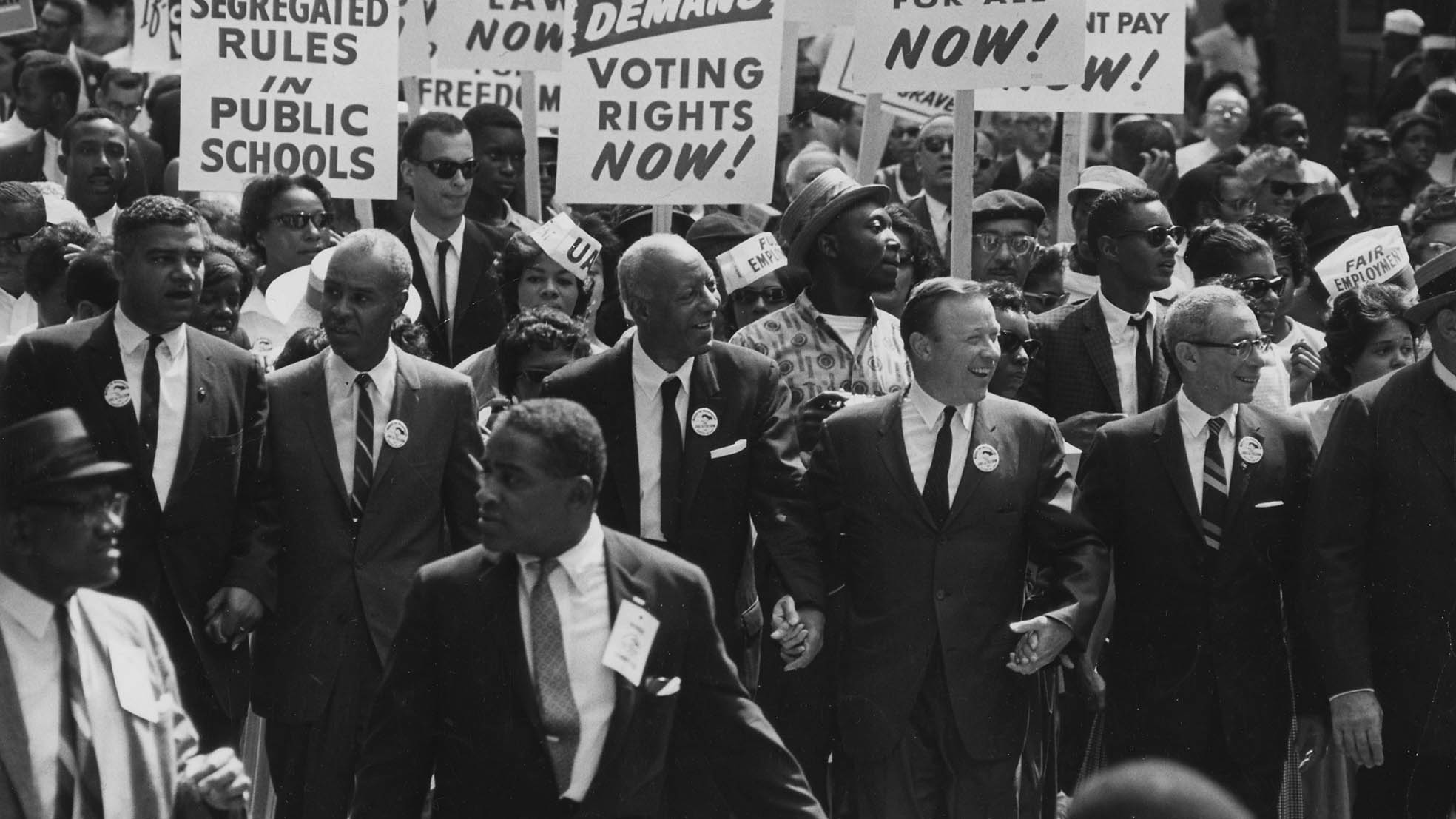
Black protest tradition in early African American literature
Respectability politics has long circumscribed the Black American experience and the literature produced by Black communities. This course examines some of the earliest examples of that literature to understand where, how, and why protest emerged in African American literature as a strategy to combat American racism and state-sanctioned violence.

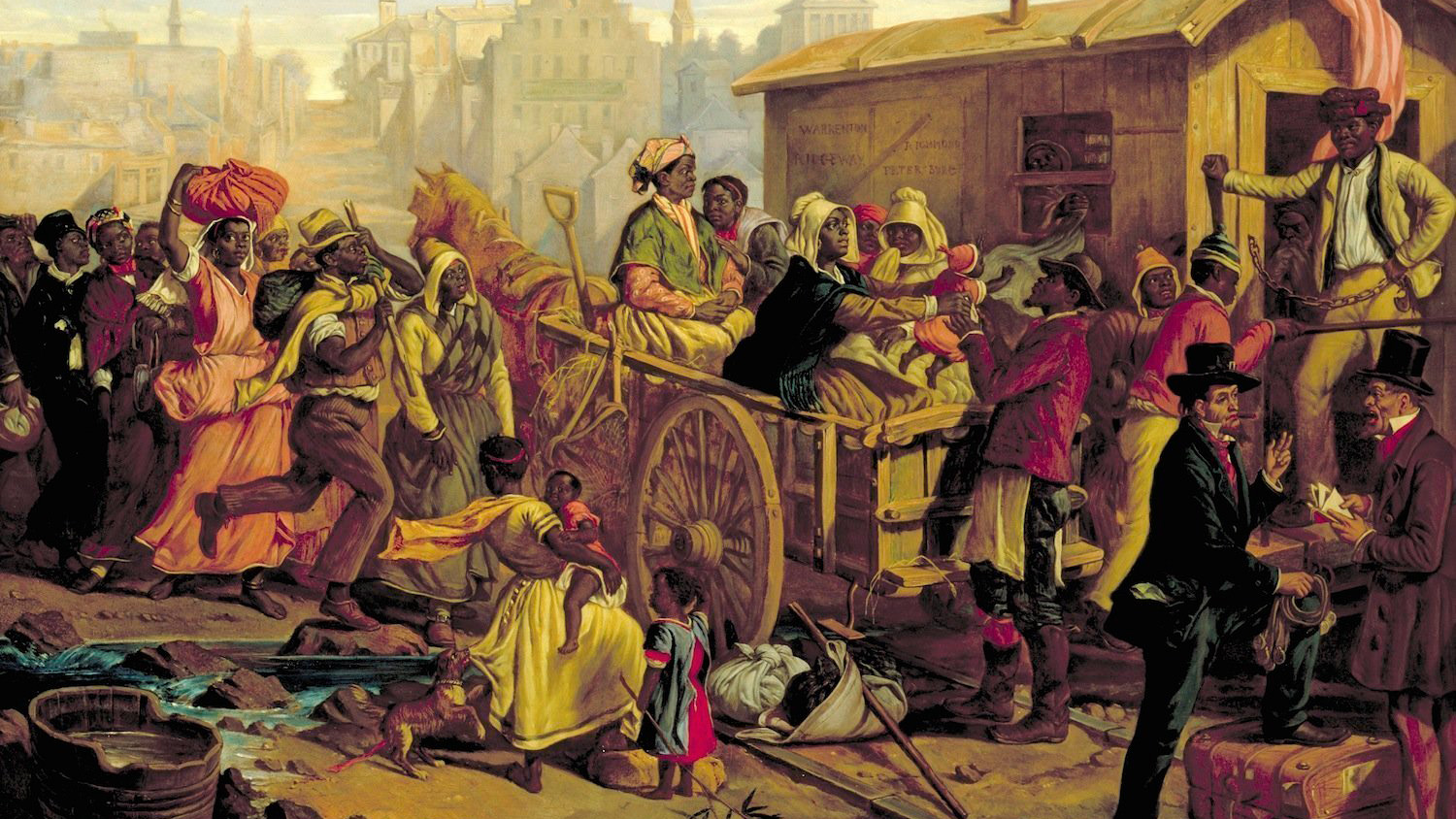
Slavery history, metaphors, and meaning
The history of slavery shaped the economic, political, and cultural foundations of the modern world. This syllabus explores how historians study slavery through archives, material culture, and critical theory, while examining the enduring legacies of enslavement in questions of race, capitalism, memory, and justice.

