
Thompson, Ayanna. “Indecorum and empire in Titus Andronicus.” Throughlines. www.throughlines.org/suite-content/indecourm-and-empire-in-titus-andronicus. [Date accessed].
Indecorum and empire in Titus Andronicus
The undeniable pull of Shakespeare's goriest tragedy
.jpeg)
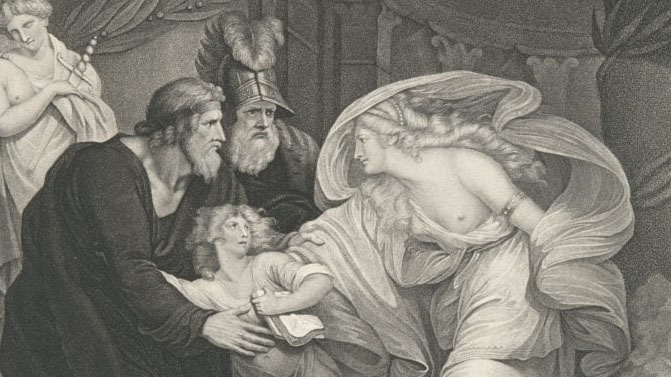
Titus Andronicus' use of violence seeks to expose how imperial Rome, built on excess and appetite, lost any coherent social and moral order. Drawing on classical ideas of decorum, the play presents a world where an empire’s drive to expand and incorporate others dissolves distinctions between Roman and foreign, civilized and barbaric. If we wipe away all the blood, we can find a cautionary reflection on early modern anxieties about empire, cosmopolitanism, and the unstable boundaries of cultural and racial identity.
Further learning

.jpg)
Titus Andronicus as the gateway drug
Students believe they know what Romeo and Juliet or Hamlet or Macbeth mean, but rarely do those “meanings” stem from the students’ close engagements with the texts. Using Titus Andronicus at the beginning of any Shakespeare class forces students to experience Shakespeare anew.
Recommended
.jpg)

Blackness and Shakespeare's sonnets
Shakespeare’s works at large, and early modern literature more broadly, all deal with constructions of race. Shakespeare’s sonnets are especially fruitful for considering how the languages of fairness and darkness are used in nuanced ways to develop particular understandings of race.


