
Hsy, Jonathan. "Teaching The Wife of Bath's Tale through adaptations." Throughlines. www.throughlines.org/suite-content/teaching-the-wife-of-baths-tale-through-adaptations. [Date accessed].
Teaching The Wife of Bath's Tale through adaptations
Develop critical reading skills across time and media
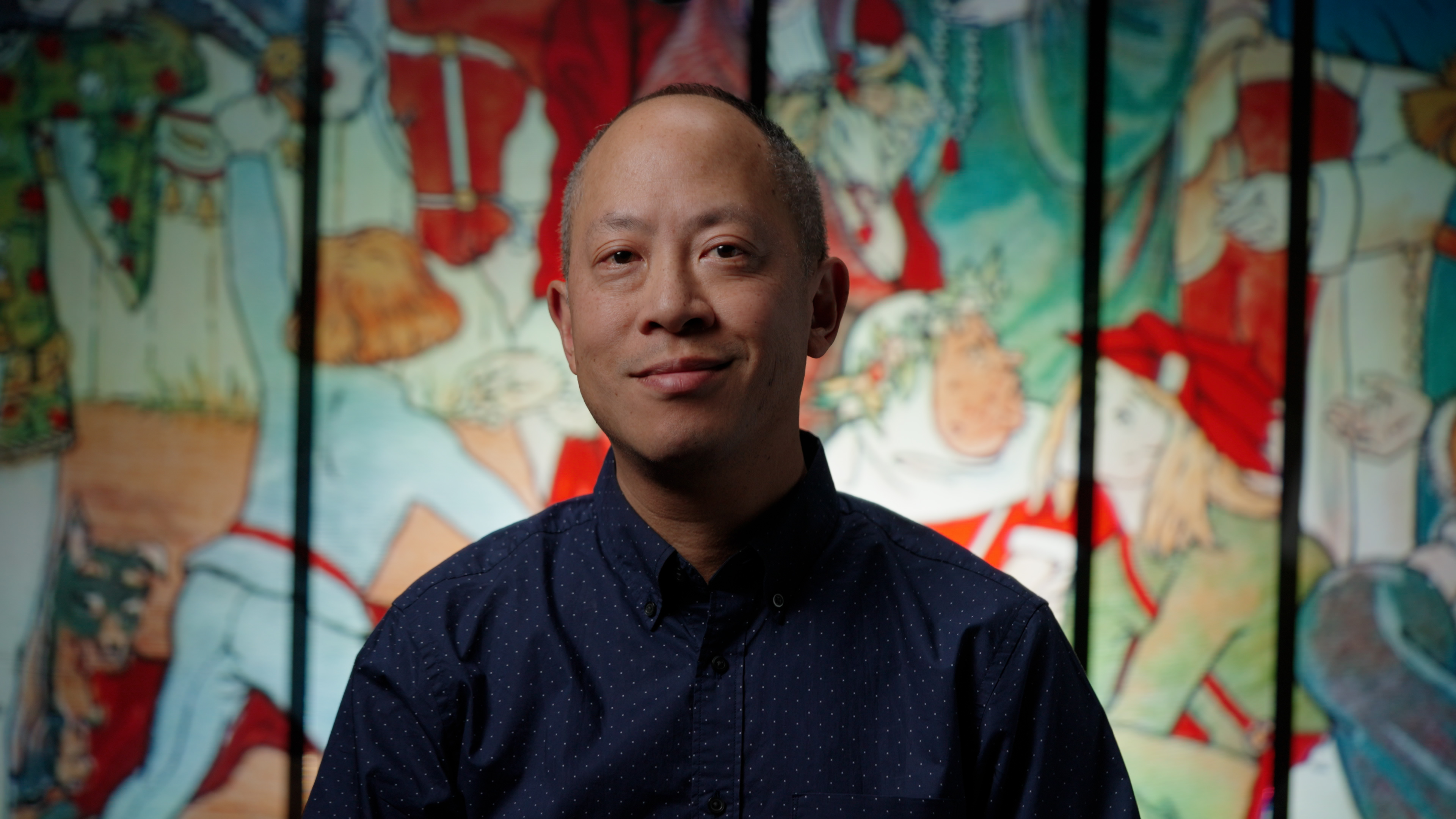
Jonathan Hsy teaches Chaucer's The Wife of Bath's Prologue and Tale through three contemporary adaptations: Joanna Quinn's 1998 animated film, Patience Agbabi's spoken-word performance "The Wife of Bafa," and Jean "Binta" Breeze's "The Wife of Bath in Brixton Market." Each adaptation keeps Chaucer's plot largely intact, but reframes the medium, the voice, or the setting, giving students a new way into a 14th-century poem they may think they already know.
Reading these adaptations alongside the Middle English text turns familiar questions into urgent ones. Quinn's animation shifts the story's focus toward the judicial power of its women and the silent reactions of a court, foregrounding the tale's questions of gender, power, and bodily autonomy. Agbabi and Breeze relocate the Wife's voice into immigrant and Afro-Caribbean performance traditions, drawing out the poem's economic language and its long history as a live, spoken act. Breeze's Brixton setting also raises hard questions worth teaching directly: When does an adaptation trade a medieval stereotype for a modern one? What does gentrification—of a market, of a neighborhood, of a voice—have to do with the Middle English concept of gentillesse?
This is a model for teaching premodern literature as a living, contested thing rather than a settled artifact. When studying adaptations, students are asked to think critically across time and media. This practices develops a methodological skill that moves well beyond Chaucer or medieval studies, allowing students to critically interrogate narratives that are presented as concretized or unquestionable.
.jpg)


