Ndiaye, Noémie. "Race and transnational theater." Throughlines. www.throughlines.org/suite-content/race-and-transnational-theater. [Date accessed].
Race and transnational theater

Unseen networks of texts and racial narratives

Download the transcript
Noémie Ndiaye
The University of Chicago

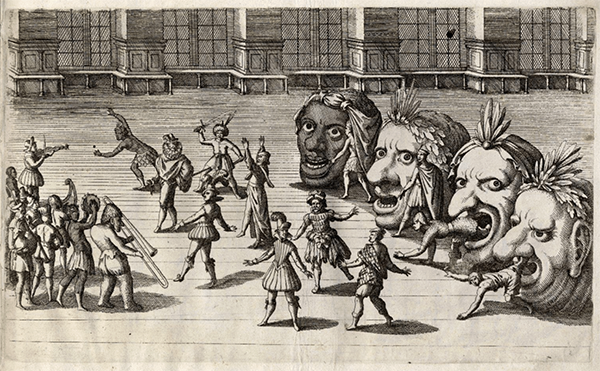
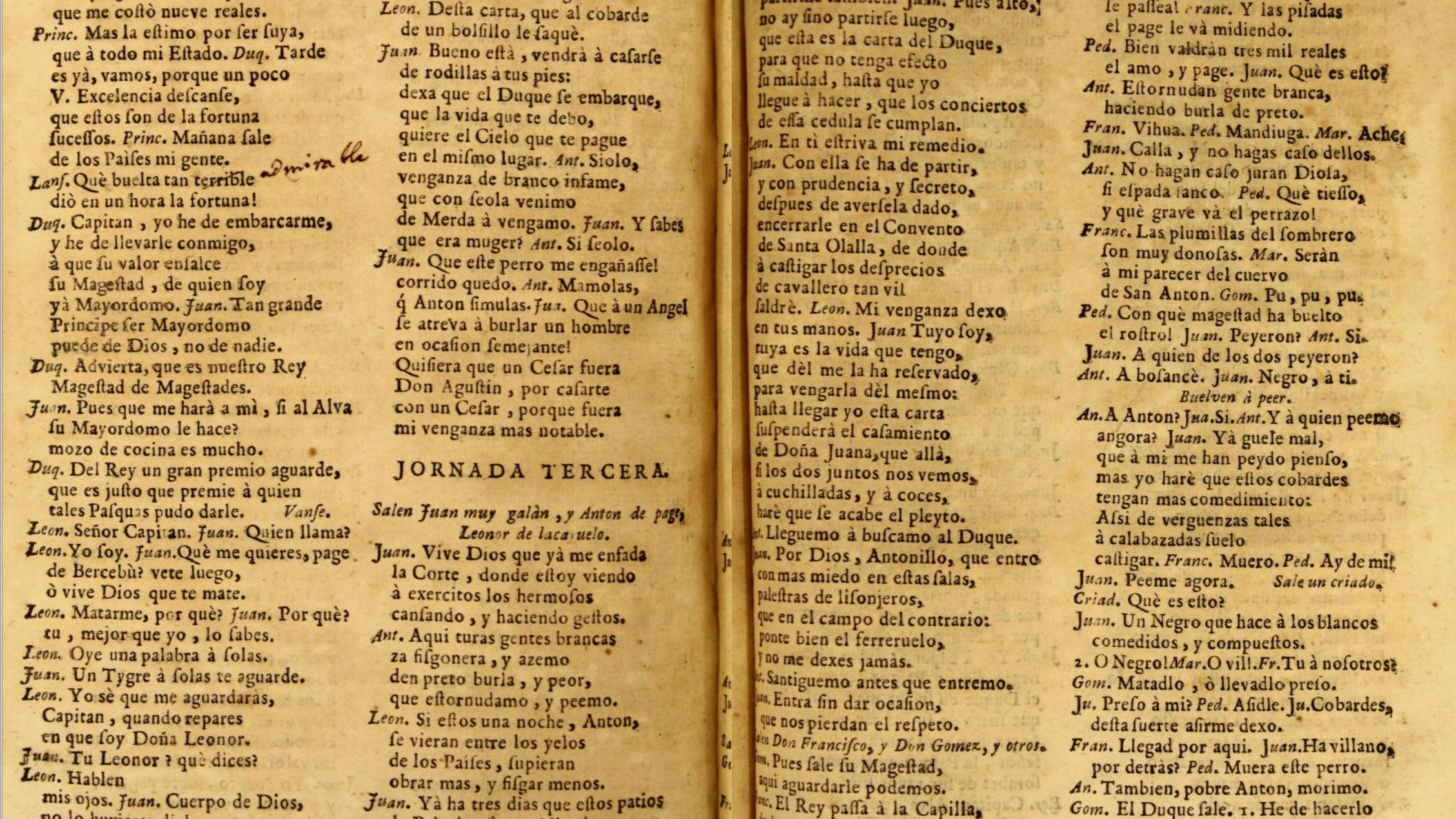
Early modern racial thinking was shaped not within a single nation but through the constant circulation of stories, performances, and ideas across Europe. From transnational plotlines linking French, Italian, Spanish, and English plays to the spread of racial impersonation techniques in music and theater, these cultural exchanges reveal how racial narratives took shape through a shared artistic ecosystem.

Further learning

Video

Race and early modern performance culture

Early modern European theater, as a widely accessible mass medium, played a major role in shaping and circulating emerging ideas about race. Noémie Ndiaye discusses how some of these racial narratives still shape world today.

Noémie Ndiaye
Activity

Mini exhibition

This assignment engages students in digital research and curation by having them create and analyze their own mini exhibition.

Noémie Ndiaye
Syllabus

Race in early modern drama

This course asks students to read plays and masques from early modern England, Spain, and France to understand how race was crafted through perfomrace and culture.

Noémie Ndiaye

Recommended

Reading list

Teaching the refugee experience with graphic texts and video games

These narratives, read and experienced alongside historical texts, can deepen student understanding of today’s refugees fleeing war, violence, conflict, and persecution.

Mayte Green-Mercado
RaceB4Race Highlight

Race-making in the Trans-Saharan slave trade

Embedding West Africa in broader transregional maps, Whiskey reviews the history of anti-Blackness in premodern Muslim societies while charting Ahmad Baba’s interventions in longstanding debates.

Cristi Whiskey
Video

Teaching early global literatures

Teaching global literatures rooted in the premodern world challenges the fantasies about the past many of our students have inherited.

Geraldine Heng