Hsy, Jonathan. "Chaucer adaptations in the classroom." Throughlines. www.throughlines.org/suite-content/chaucer-adaptations-in-the-classroom. [Date accessed].
Chaucer adaptations in the classroom
A collection of activities and assignments for engaging with Chaucer through adaptations
Reading Chaucer alongside modern adaptations encourages students to see The Canterbury Tales as a living tradition rather than a fixed medieval text. Across these activities, students compare original Middle English works with reinterpretations by contemporary writers and artists whose perspectives are shaped by different languages, cultures, and histories. By examining how stories change as they move across time and place, students consider how adaptation can challenge inherited ideas about race, gender, religion, class, and belonging.
The activities build from close reading to critical comparison and, ultimately, to creative practice. Students analyze how contemporary authors reshape Chaucer's characters, settings, and narrative voices before experimenting with translation and adaptation themselves. Together, these exercises demonstrate that every retelling is also an act of interpretation, revealing how medieval literature continues to generate new conversations about language, identity, and power.
Chaucer’s General Prologue
Read the Middle English work, then read these adaptations
- Mundo, Frank. The Brubury Tales. Createspace Independent Publishing Platform, 2014.
- Mundo, Frank. "How I Became a Mexican" (YouTube video).
- Nelson, Marilyn. "General Prologue," in The Cachoeira Tales and Other Poems. Baton Rouge: Louisiana State University Press, 2005.
- Ouyang, Yu. "A Novel, Tentatively," in The Kingsbury Tales. Blackheath, NSW: Brandl & Schlesinger, 2008.
Discussion questions
Compare the narrative persona in Chaucer’s text to the poetic speaker in the reinvented General Prologue. To what extent does the poetic narrator disclose his or her racial background? What is the new geographical or cultural setting for the frame narrative? What is each poetic speaker’s relationship to English? How does the racialization of fictional characters in each work complicate Chaucer’s social categorizations of gender, social class, or vocation?
Chaucer’s Wife of Bath’s Prologue and Tale
Read the Middle English work, then read/watch these adaptations
- Agbabi, Patience. "The Wife of Bafa" in Transformatrix. Performance available on YouTube.
- Agbabi, Patience. "The Wife of Bath's Tale: What Do Women Like Bes'?" in Telling Tales. Edinburgh: Canongate, 2014.
- Breeze, Jean "Binta." "The Wife of Bath Speaks in Brixton Market," in The Arrival of Brighteye. Performance and interview available on YouTube.
Discussion questions
Compare the fictive Alisoun in Chaucer’s text to the reincarnated speaking figure in each modern work. Does each work preserve or work against Chaucer’s poetic verse form? How does each modern-day performance invite you to ask or notice new things about the original work?
Chaucer’s Man of Law’s Tale
Read the Middle English work, then read/watch these adaptations
Chaucer’s Man of Law’s Tale is a well-known story that sets up a stark contrast between a virtuous, tempest-tossed Christian woman from Rome (Constance) against an evil Syrian Muslim woman (the Sultaness).
Helpful literary context
- Heng, Geraldine. Empire of Magic: Medieval Romance and the Politics of Cultural Fantasy. New York: Columbia University Press, 2003. Read Chapter 4, "Beauty and the East."
- Whitaker, Cord J. "Race and Racism in The Man of Law's Tale," in Open Access Companion to the Canterbury Tales. Medieval Institute Publications.
Modern adaptations
- Agbabi, Patience. "Joined Up Writing" in Telling Tales. Edinburgh: Canongate, 2014.
- Hetreed, Olivia, adapt. The Canterbury Tales: The Man of Law's Tale. Directed by Julian Jarrold. BBC, 2003. Internet Archive.
- Pincus, Anna, and David Herd, eds. Refugee Tales. Manchester: Comma Press, 2016. Read the "Prologue" by David Herd and "The Migrant's Tale" by Dragan Todorović.
- For additional context on the project, see Refugee Tales.
Optional
- Hsy, Jonathan. "Chaucer's Brown Faces: Race, Interpretation, Adaptation." The Chaucer Review 56, no. 4 (2021): 378–96.
Discussion questions
How do the modern adaptations reconfigure the story’s explorations of gender, religion, race, and geography? When the modern-day Refugee Tales project repurposes this story to emphasize the plight of modern-day refugees, how do they transform Chaucer’s poetic form, tone, or politics?
Adapting Chaucer across language
When teaching Chaucer, Jonathan Hsy always juxtaposes the Middle English poetry with modern-day adaptations. The class starts by reading selections from The Canterbury Tales in the original Middle English (the Harvard Chaucer’s interlinear translations with minimal gloss can be useful for students who are still getting acquainted with the language).
In this assignment, Jonathan Hsy invites students to consider how race, language, and identity shape both medieval texts and their modern afterlives. A creative assignment then asks students to participate in this process themselves, using translation and adaptation as a way to explore how stories carry and transform meanings about who speaks and who is seen across time.
If students know another language (whether a language they informally grew up with or one they learned later in life), they can consult the Global Chaucers bibliography locate a translation of Chaucer in their “other” tongue.
Activity
Pick 20 lines from Chaucer’s text and compare the equivalent lines (or as close as possible) in the modern text of your choice.
What translation choices surprise you?
If you were to revise the text, what choices would you make and why? Consider: word choice, verse form, and informality vs. formal register or voice.
Further learning
Language, race, and Chaucer adaptations
A reading list for teaching Chaucer through modern adaptations. This list focuses on scholarship for reading and understanding Chaucer from a premodern critical race studies lens, including global Chaucer adaptations to help students explore how medieval texts continue to inform questions of identity, power, and belonging.
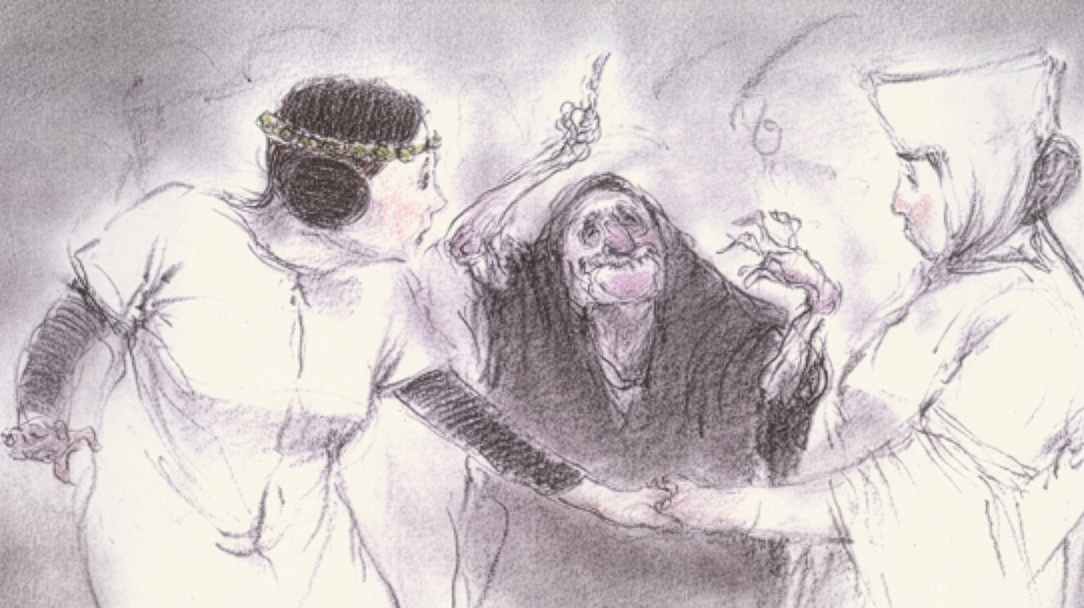
Teaching The Wife of Bath's Tale through adaptations
Chaucer's most outspoken pilgrim gets three modern makeovers: an animated film, a spoken-word performance, and a poem staged in a London market. Jonathan Hsy shows how these adaptations open fresh classroom conversations about gender, power, and justice.
Recommended
.jpg)
La Chanson de Roland and white supremacist medievalisms
La Chanson de Roland as a national epic was a product of both European nationalist and colonial aspirations. It's important for students to understand how the poem and its histories can reiterate Eurocentric white supremacist values if not properly contextualized.